The New Reality
For years, waste management was considered an operational issue. Today it is increasingly becoming a governance, ESG and risk-management issue.
Drivers of Change
Three forces are converging:
1. Regulation
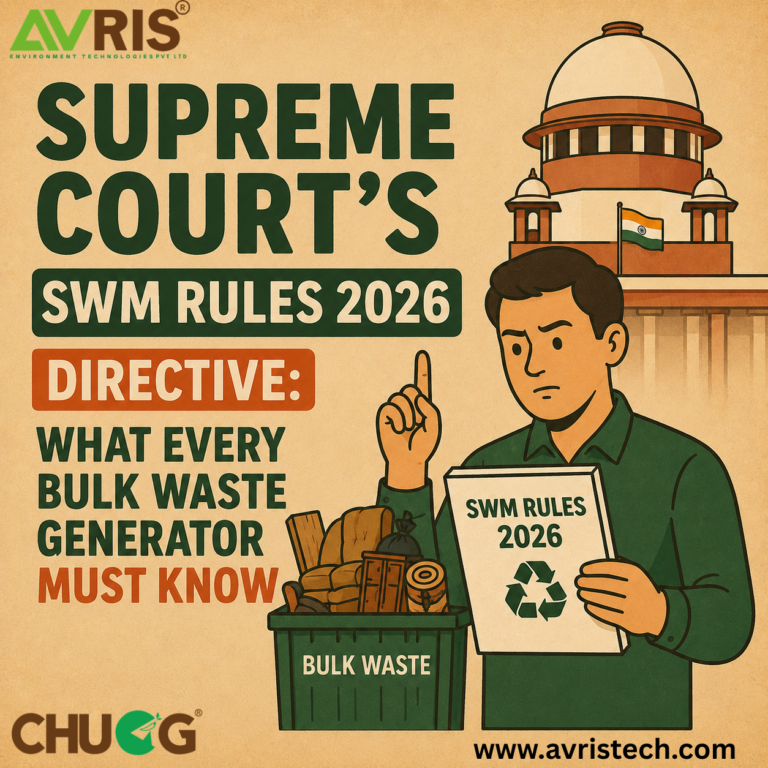
SWM Rules 2026 and the Supreme Court’s recent directions are increasing compliance expectations.
2. ESG Reporting
Investors and stakeholders increasingly seek measurable environmental performance.
3. Cost Management
Landfill disposal and transportation costs continue to rise.
The Business Opportunity
Organizations can transform food waste from a cost centre into a resource stream through:
- Biogas generation
- Renewable energy substitution
- Carbon footprint reduction
- Fertilizer recovery
Why Point-of-Generation Treatment Works
Centralized disposal systems often involve collection, transportation and processing challenges.
On-site treatment:
- Reduces logistics costs
- Improves traceability
- Provides measurable outcomes
- Supports sustainability goals
Looking Ahead
The question is no longer whether organizations should manage food waste responsibly.
The question is how quickly they can implement solutions that satisfy both compliance requirements and sustainability objectives.